
In and around Vancouver, it’s not unusual for a home to come with a bit of drama in the landscape. Ocean views, forested slopes, and cliffside builds are part of what makes living here so special—but they also tend to create one very practical challenge: getting up and down the property safely and comfortably.
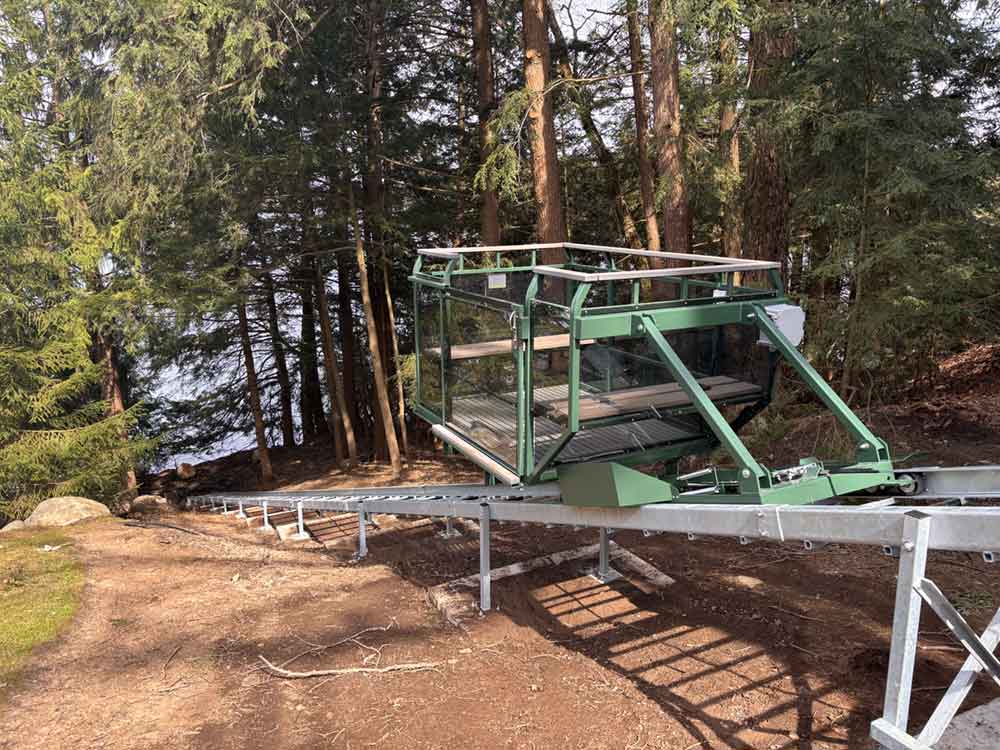
For homeowners dealing with steep grades, long staircases, or difficult waterfront access, a hillside tram in Vancouver can completely change how a property functions day to day.
Sometimes called a funicular, hillside lift, or outdoor elevator, these systems are designed specifically for real-world terrain—not flat suburban lots. They quietly take the effort out of moving between elevations, whether that’s from a driveway down to a home, a house down to the dock, or between different levels on a steep site.
But not every property needs one. So what kinds of homes actually benefit the most?

Waterfront Properties Where the Dock Feels “Too Far Away”
One of the most common situations where a Vancouver hillside tram makes sense is waterfront living.
On paper, the home is perfect. In reality, the dock might be down a long staircase that becomes less appealing over time—especially when you’re carrying groceries, paddleboards, fishing gear, or heading down for a morning coffee by the water.
This is especially common on West Vancouver waterfront lots, Gulf Islands properties, Sunshine Coast cabins, and Vancouver Island shoreline homes.
A funicular system removes that friction entirely. Instead of thinking twice about the climb back up, homeowners can move between the house and the water easily and safely, regardless of the grade.
You can see more about these systems here: Hillside Trams in BC
Steep Hillside Homes Built for the View
Across Greater Vancouver, many homes are built into slopes rather than on flat land. The tradeoff is almost always the same: incredible views in exchange for a lot of stairs.
In North Vancouver and West Vancouver especially, it’s common for homes to have multiple levels connected by outdoor staircases that become daily workout routes.
This is where a residential hillside lift becomes a practical mobility solution rather than a luxury feature.
Instead of fighting the terrain, a hillside tram allows it to become part of the home’s flow. Movement between driveway, main entrance, patios, and secondary suites becomes smooth and predictable.
Vacation Homes and Summer Properties
Summer is often when homeowners realize just how much steep terrain affects usability.
Vacation homes across BC can feel effortless when empty, but once guests arrive and luggage, coolers, and beach gear enter the picture, stairs quickly become a challenge.
A hillside tram in Vancouver or surrounding regions helps remove that barrier entirely.
Instead of planning around the terrain, homeowners can focus on actually enjoying the property—hosting family, relaxing outdoors, and moving between levels without effort.
When Accessibility Becomes a Long-Term Consideration
Not every homeowner installs a hillside lift because they need one today—many install them because they want to ensure long-term usability of their property.
Outdoor stairs can become more difficult over time due to weather, aging, or temporary mobility limitations. In Vancouver’s wet climate, even well-built stairs can become a safety concern in winter months.
A hillside tram or outdoor elevator helps maintain independence and keeps the entire property accessible year-round.
Is Your Property a Good Fit for a Hillside Tram?
While every site is unique, hillside tram systems are typically best suited to properties with:
- Significant elevation changes between access points
- Waterfront homes with steep dock access
- Steep driveway-to-home transitions
- Multi-level outdoor living areas
- Long or repetitive stair routes
- Homes where aging in place is part of long-term planning
To learn more about how these systems are designed and installed in BC, visit Total Home Access Hillside Trams.
Final Thought
In Vancouver, steep terrain is part of the lifestyle—but it doesn’t have to be a daily obstacle.
A hillside tram connects the parts of a property that should feel easy to reach, making the entire home more usable, comfortable, and future-ready.